Prayers at Maple Tree Medows

Prayers at Maple Tree Medows
Three Rivers, MI

Monday, March 7, 2011

“Structure, Heart and Soul" -- Bair Lane Bank Barn, Hay Barn, Shop and more…


When I drive by farms it is hard for me to understand why there are so many buildings. What could they all possible be used for? A barn I am starting to understand. But what are all those other buildings called? My conversations with Gary and Randy took me through twenty one years of their joint ownership of Bair Lane Farm and its evolving use of structures, old and new, as the times and their lives in farming have changed.
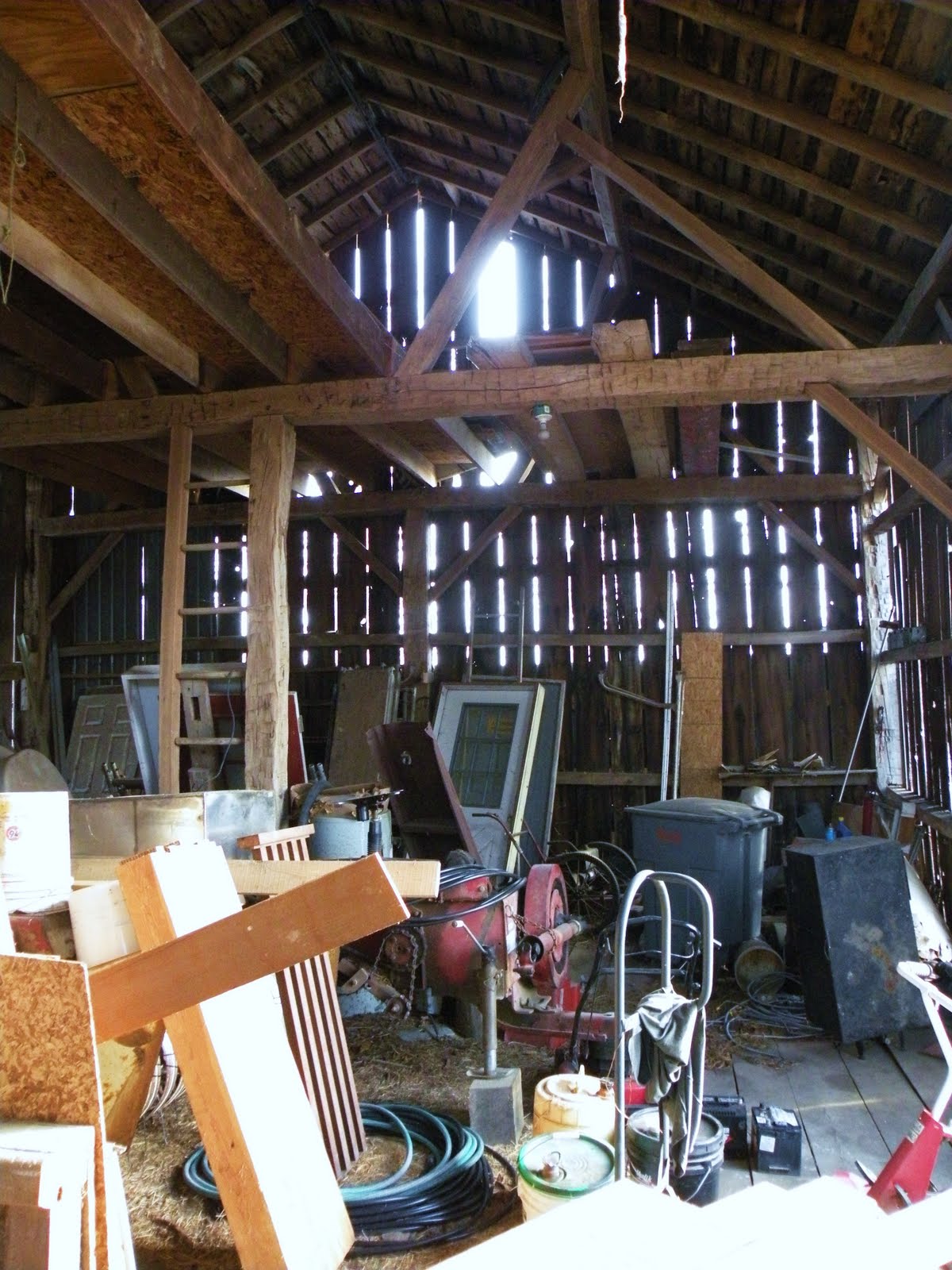


A functional structure. That’s me. Built as a bank barn. Made it easy to wheel wagons in. Stored hay. Kept cows warm below. Now its sheep on the bottom and, well, all kinds of farm stuff, on the top. Hay in the lean to on the back side. Storage, that’s me.


Folks don’t know much of my early story. Note turn of the century signs. My beams are hand hewn walnut. My rafters, milled. My siding, pine, and not from around here. My nails, square headed.


Didn’t have the word “technology” when I was made. But all the latest was used to make me sturdy, serviceable. Just poor mortar in the stone foundation didn’t stand the time. Gary and Randy had to shore me up with a cement wall. (Josh put his mark on the project.)


Decided I would take too much time, money and labor to be a duplex home for the two young families. That was twenty one years ago: two families, 120 acres farm and one old barn. The old house had caved in. The old corn crib came down. And they took it from there.


Put acres into hay, planting oats as a cover crop.
Put acres into government conservation program, incentive not to grow crops – corn, soy beans and the like. Preserved the soil.
Space for gardens.
Kept it organic.

Family homes replaced trailers. Gary and Chris designed their home to be built from a recycled barn. (see Nofsinger Barn)

Randy wanted a purely functional home to live in. Says he lives in the barn – but it’s really the work, the earth, the animals, he lives in.


Animals and more animals and places for them all: sheep, an ass to guard them, pigs, goats, chickens, turkeys, bees, rabbits, dogs, and cats. And the "cows" are now for beef and not milking.


In the last two years I’m not much the center. Earth is tilled up for vegetables for farm markets. Nofsinger One Straw Farm side by side with Ewert’s Bair Lane Farm.


I no longer sit here alone. At the end of the lane, I stand, the bank barn. Next to me, the farm shop. Then the shop. Across from the greenhouse. Further on, the high tunnel. And toward the pasture, the hay barn.


Me and the hay barn are partners, you see. I store equipment. The square bales of hay. She stores the round bales. At 500 pounds a piece, she needs space. The men made her big and wide of re-used metal. She is the “crop barn” for hay here.


One bale has been going for $25 delivered. With high costs of lime and phosphorus these years, using less fertilizer, the hay is thinning. Rain from Gary, IN, to here, makes the Ph off. Means hard work, lots of money for staying organic. So what’s next?

They still give me credit. May be old. Don’t say much. But not useless. Even Randy says,

Barns are the heart and soul of the farm. Like that old bank barn. That was really the only building that was here when it was an operating dairy barn. They did everything in that barn: milked the cows, and housed them and stored the feed for them. Until 1955 they had about twenty stanchions on that lower level. Dairy farming was hard work in those days.


Now it’s the farm shop that’s the hub. You need to stop and look in there. Maple syrup boiling, seedling growing, honey extracting, vegetable storing, office, tools, eggs, it’s a mess, but it’s all in there.


Gary wonders what is next:

Don’t know when the conservation agreement is over. Better check that. Some people say with the price that corn and soy beans are this year – maybe plant corn back there!


I’ll still be here…


Monday, February 14, 2011

Drive-by Barning: Shipshewana and Middlebury, IN

Almost everywhere I drive I see barns, old and new, in all manner of forms and purposes. Here is a sampling of photos taken on my drive to Shipshewana, IN and back. I was thrilled when I saw "real" barns -- with piles of manure next to them! Most of these barns seem to speak for themselves.


BARN [bahrn] from Dictionary.com

–noun
1. a building for storing hay, grain, etc., and often for housing livestock.
2. a very large garage for buses, trucks, etc.; carbarn.

Origin:
before 950; Middle English bern, Old English berern ( bere ( see barley ) + ern, ǣrn house, cognate with Old Frisian fīaern cowhouse, Old High German erin, Gothic razn, Old Norse rann house; compare ransack, rest )

Questions:

Some things with no "barn" function are in "barn form."
Why?
Do barns attract business?
If so, what are we really looking for?
And what do we find?


SHIPSHEWANA, IN...


MIDDLEBURY, IN...


Monday, February 7, 2011

Art in the Barn -- Red Tail Farm


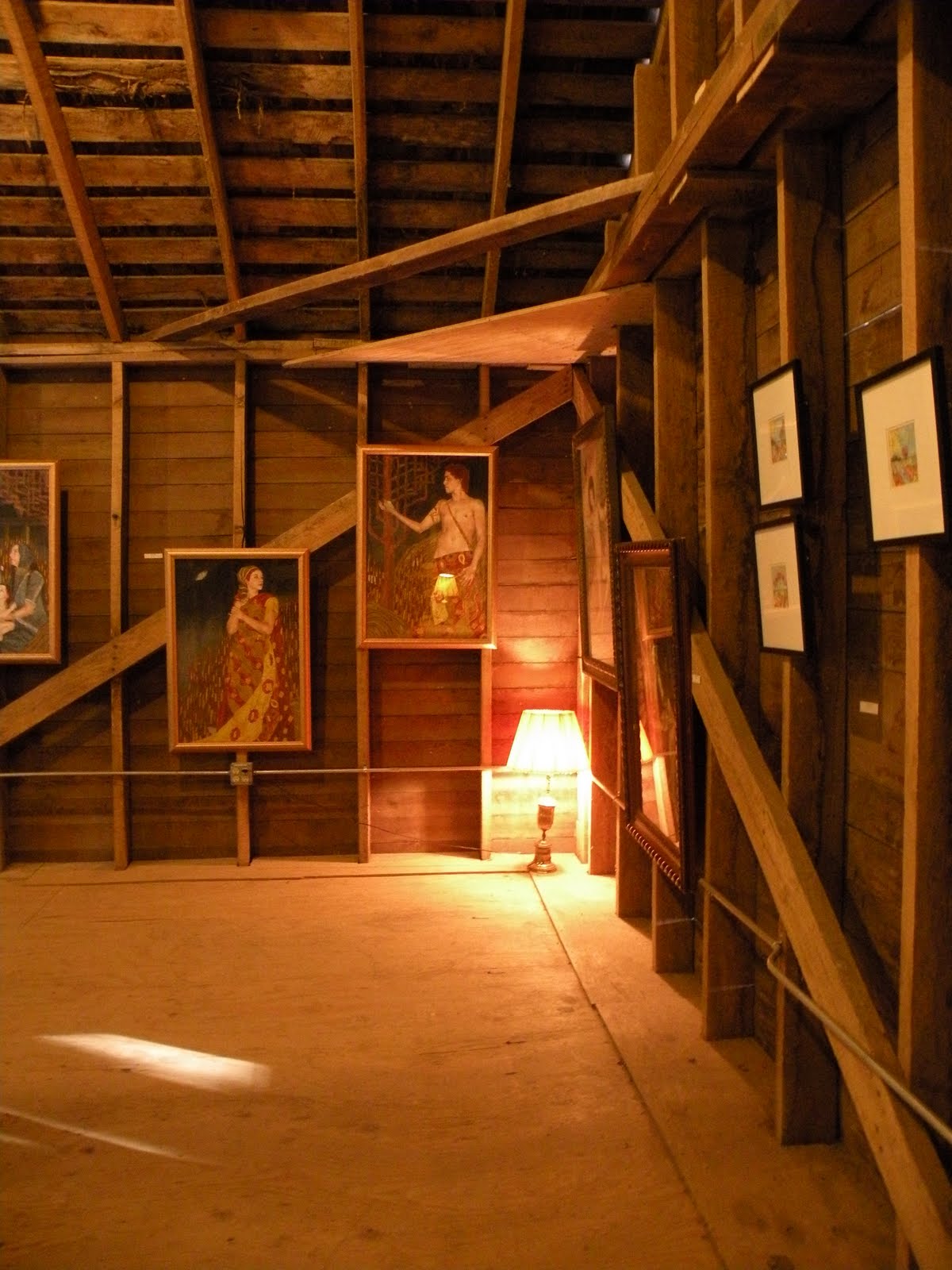
In the bleak of winter, weekly barn visits have slowed down. So I fondly remember my visit to the barn at Red Tail Farm, on the Millrace in Goshen, IN. Last October, for the second year in a row, this barn was the site for ART IN THE BARN. The first year I was thrilled to show for the first time some of my watercolors and photos. This year my daughter-in-law displayed lovely charcoal figure drawings.


The fabulous and simple re-invention of this barn space provided great viewing of all kinds of local artists, including otherly abled artists from ADEC (the Association for the Disabled of Elkhart County). And in the evenings there was even an aerial artists show (which I did not get to see.)


Open space.
Creative minds.
Art in the Barn.


Gardens have sprung up again on this old farm by the mill race.
The house community of twenty somethings sees the earthy ones
come and go.

Me? The barn?
Not needed too much for these veggie growers.
Young ones tend together the lambs,
and offer homegrown produce to share.
So old open space
(that would be me)
also sprouted, re-envisioned.
Refurbished, re-modeled?
No, too lofty.


I am the same old me, just altered:
a local harvest shelter
for Goshen’s own
homegrown paintings, prints, film, sculpture, jewelry, watercolors,
Gold Mine Pickers, hay rides,
mulled cider from Daily Grind,
bread and humus from Rachel’s Bread.
Even acrobats returned home to Goshen
to balance on ropes
hung from my ever strong beams.


The hay loft?
A gallery,
with the mow lined with old
wooden theater chairs.


Where the hay wagons rolled in?
Welcome. Walk on in.
Stand and visit.
Wander.
Look.
Look again.


The new harvest is gathered in. Colors,
textures, impressions, beauty are stored in the soul
for a long winter,
a long winter.
And then another growing season.


Maybe in the bleak of winter
poets write, painters paint,
and musicians tune their tunes
for the next art harvest.


Jodi Magallanes of the Elkhart Truth (October 10, 2010) wrote:

Barns are drafty, dirty and definitely different
from most art show venues.
But last year, Goshen artist Leah Schroeder
saw potential
in the jarringly unaristocratic
ambience
of her friend's backyard storehouse.
Schroeder,
co-organizer Vicki Kaplan,
and Adam Scharf,
the owner of Red Tail Farm,
hosted
the first "Art in the Barn" public event
in October 2009. They're doing it again…


They did it again.
And I hope, again and again.
Never in a barn’s dream did I think
I would be beautiful!


Scharf has been fully behind the idea
of altering his property
and bringing a few hundred
people to his home
once a year
for the show. His, Schroeder's
and Angie Garber's
friends are "musicians, farmers and artistic
types into
sustainable living
and creating beauty around them,"
said Schroeder.


I say:
Local genius.